Android 14 Multi Window is greater than only a function; it is a gateway to a complete new world of productiveness and seamless multitasking. Think about juggling a number of apps, effortlessly switching between duties, and experiencing a stage of digital freedom you’ve got by no means recognized earlier than. This is not nearly splitting your display; it is about crafting a digital workspace that adapts to your wants, whether or not you are a pupil, an expert, or just somebody who loves to remain related.
From the core enhancements that make switching between apps a breeze to the developer instruments that empower app creators to optimize their creations for a multi-window world, Android 14 is revolutionizing how we work together with our units. We’ll discover the thrilling new options, the essential concerns for app compatibility, and the efficiency tweaks that guarantee a clean and pleasing expertise.
Get able to dive deep into the world of Android 14 Multi Window and uncover the way it’s altering the sport.
Overview of Android 14 Multi-Window Enhancements

Android 14 considerably refines the multi-window expertise, constructing upon the foundations laid in earlier variations of the working system. This iteration focuses on enhancing usability, enhancing useful resource administration, and offering builders with extra management over how their functions behave in multi-window environments. The enhancements are designed to make multitasking on bigger screens, like tablets and foldables, extra intuitive and environment friendly, whereas additionally optimizing the expertise on smaller units.
Core Enhancements to Multi-Window Performance
Android 14 introduces a number of key enhancements to the multi-window system, basically altering how customers work together with a number of functions concurrently. These modifications intention to streamline the workflow and scale back friction when switching between apps or adjusting window sizes.
- Enhanced Gesture Navigation: The navigation gestures have been optimized for multi-window use. For instance, swiping from the sting of the display to return or change apps is now extra dependable and fewer susceptible to unintentional triggers. The system is designed to intelligently differentiate between consumer intent when a number of home windows are open, lowering the possibilities of unintended actions.
- Improved Drag and Drop: Drag-and-drop performance has been refined to make it simpler to switch content material between apps in several home windows. The system now supplies clearer visible cues and suggestions throughout drag operations, making it extra intuitive to maneuver textual content, photographs, and different knowledge. Moreover, the system is designed to deal with drag-and-drop operations between apps which will have completely different safety permissions.
- Window Administration Enhancements: Android 14 introduces extra versatile window administration choices, together with improved assist for floating home windows and a extra streamlined course of for resizing and repositioning apps. Customers have higher management over the association of their open home windows, making it simpler to customise their multitasking atmosphere.
- Utility Compatibility: A major focus has been positioned on enhancing the compatibility of present functions with multi-window mode. Android 14 contains options to assist builders guarantee their apps behave appropriately in varied window sizes and orientations, lowering the necessity for in depth code modifications.
Examples of Person Expertise Enhancements
The modifications in Android 14 translate into tangible enhancements within the consumer expertise when multitasking. These enhancements make it simpler to handle a number of apps concurrently, streamlining productiveness and enhancing total enjoyment.
- Seamless App Switching: Switching between apps in multi-window mode is now sooner and extra responsive. The system prioritizes the at the moment lively app, making certain clean transitions and minimal lag. That is notably noticeable when switching between resource-intensive functions.
- Intuitive Resizing: Resizing home windows is extra intuitive, with clearer visible indicators and easier-to-use controls. Customers can rapidly regulate the dimensions of every window to swimsuit their wants, permitting for a personalised multitasking expertise. For example, a consumer studying a doc in a single window and taking notes in one other can rapidly resize each home windows to optimize their view.
- Enhanced Content material Sharing: Sharing content material between apps is less complicated, with improved drag-and-drop performance and higher assist for copy-and-paste operations. This facilitates a extra seamless workflow when working with a number of functions concurrently. For instance, a consumer can simply drag a picture from a photograph modifying app right into a messaging app to share it with a good friend.
- Optimized Efficiency: Android 14 is designed to optimize efficiency when operating a number of apps in multi-window mode. The system intelligently manages assets to make sure that every app has the mandatory assets to run easily.
System Assets Allocation in Multi-Window
Android 14 employs a complicated useful resource allocation system to handle system assets when a number of apps are operating in multi-window mode. This technique dynamically adjusts useful resource allocation primarily based on components such because the lively app, the dimensions and visibility of every window, and the general system load.
- Prioritization of Lively Apps: The system prioritizes the lively app, allocating extra CPU and reminiscence assets to make sure a responsive and clean consumer expertise. Which means the app the consumer is at the moment interacting with will obtain probably the most assets.
- Dynamic Reminiscence Administration: The system dynamically manages reminiscence allocation, adjusting the quantity of reminiscence allotted to every app primarily based on its wants. This prevents any single app from monopolizing system assets, making certain that every one apps can perform successfully.
- Clever CPU Scheduling: The CPU scheduler intelligently distributes CPU cycles among the many operating apps, making certain that every app receives its justifiable share of processing energy. This helps to stop lag and enhance total system efficiency.
- Energy Effectivity: Android 14 incorporates power-saving options that optimize useful resource allocation to scale back battery consumption. For instance, the system might throttle the efficiency of background apps to preserve energy.
- Person-Configurable Choices: In some circumstances, customers have the power to configure sure features of useful resource allocation, reminiscent of the quantity of reminiscence allotted to every app. This permits customers to customise the system to their particular wants.
New Options and Capabilities
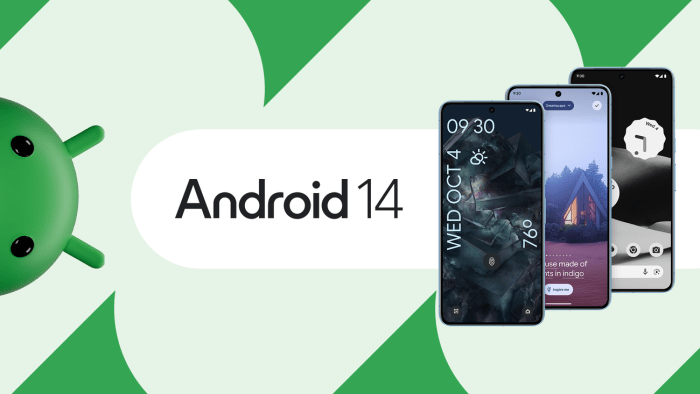
Android 14’s multi-window mode is a major leap ahead, providing a extra refined and highly effective expertise for customers and builders alike. This iteration focuses on enhancing multitasking capabilities, enhancing app compatibility, and optimizing the expertise on bigger screens, reminiscent of tablets and foldables. The objective is to supply a seamless and intuitive atmosphere the place customers can effortlessly change between and work together with a number of functions concurrently.
Enhanced Multi-Window Performance
Android 14 introduces a number of key enhancements to the core multi-window options. These updates intention to enhance consumer productiveness and supply a extra versatile multitasking expertise.
- Improved Gesture Navigation: Android 14 refines gesture navigation inside multi-window environments. Swiping from the sides is now extra intuitive and responsive, making it simpler to modify between apps and navigate inside every window. This replace goals to attenuate unintentional triggers and supply a smoother total expertise. For instance, a consumer can rapidly swipe to the left to return in a single app whereas concurrently swiping up from the underside to entry the house display.
- Drag-and-Drop Enhancements: Drag-and-drop performance has been considerably improved. Customers can now extra simply drag and drop content material between completely different apps operating in split-screen or freeform mode. This contains textual content, photographs, and different supported file varieties. Think about a consumer effortlessly dragging a photograph from a photograph modifying app and dropping it right into a messaging app to share with a good friend.
- Persistent Window State: Android 14 introduces a extra strong system for preserving window states. Apps now higher retain their dimension, place, and different configurations when the consumer switches between them or returns to a beforehand used multi-window setup. This implies much less time spent rearranging home windows and extra time centered on the duty at hand.
- Simplified Resizing: Resizing home windows is now extra intuitive, with clearer visible cues and easier-to-use controls. Customers can regulate window sizes with higher precision, making certain apps match completely throughout the out there display area. This contains improved assist for each split-screen and freeform window modes.
App Compatibility and Developer Diversifications
Guaranteeing app compatibility throughout varied display sizes and multi-window configurations is essential for a clean consumer expertise. Android 14 contains modifications that require builders to adapt their apps to take full benefit of the brand new multi-window options.
- Goal SDK Requirement: Builders are inspired to focus on the newest Android SDK to make sure their apps are absolutely appropriate with Android 14’s multi-window options. Apps focusing on older SDK variations might expertise compatibility points or limitations in multi-window mode.
- Lifecycle Administration: Apps must be designed to deal with the Android lifecycle correctly. This contains appropriately managing app states when the app loses or positive aspects focus, particularly in multi-window environments. Builders should be sure that their apps gracefully deal with occasions reminiscent of onPause() and onResume() to keep away from sudden conduct.
- Multi-Window Consciousness: Apps ought to concentrate on the multi-window atmosphere and dynamically regulate their UI to suit the out there area. This would possibly contain utilizing completely different layouts or adapting content material primarily based on the window dimension. For instance, a information app might show a two-column format in a bigger window however change to a single-column format in a smaller window.
- Testing and Optimization: Builders should totally check their apps in varied multi-window configurations, together with split-screen and freeform modes, on completely different units. This includes testing for correct UI rendering, enter dealing with, and knowledge persistence. Correct testing is crucial to establish and repair any compatibility points.
Enhancements for Massive-Display Units
Android 14 supplies vital enhancements for large-screen units, reminiscent of tablets and foldables, to optimize the multi-window expertise and maximize display actual property.
- Optimized UI Layouts: Android 14 encourages builders to design UI layouts that adapt to completely different display sizes and orientations. This contains utilizing responsive design strategies, reminiscent of dynamic layouts and adaptive UI elements, to make sure apps look and performance appropriately on tablets and foldables.
- Enhanced Taskbar: The taskbar, a key ingredient for multitasking, has been improved on large-screen units. It affords fast entry to ceaselessly used apps and permits customers to simply change between operating apps. The taskbar is designed to be extra intuitive and customizable, enhancing total productiveness.
- Improved Freeform Mode: Freeform mode, which permits apps to be displayed in resizable, floating home windows, has been enhanced. Customers can now simply handle and organize a number of floating home windows, making it simpler to work on a number of duties concurrently. That is notably helpful for productivity-focused workflows.
- Foldable Gadget Assist: Android 14 contains particular optimizations for foldable units, reminiscent of improved assist for hinge angle detection and display continuity. Apps can now seamlessly transition between the folded and unfolded states, sustaining their state and format. Think about a consumer opening a foldable system and persevering with to observe a video that routinely resizes to suit the expanded display.
App Compatibility and Testing
Guaranteeing your apps seamlessly combine with Android 14’s multi-window capabilities is paramount for a clean consumer expertise. This part supplies a sensible information for builders to navigate app compatibility and rigorous testing, finally resulting in polished and useful functions throughout varied system configurations.
Steps for Guaranteeing Android 14 Multi-Window Compatibility
To ensure your app shines in Android 14’s multi-window atmosphere, observe these important steps. These steps usually are not simply recommendations; they’re the constructing blocks of a well-behaved app that respects the consumer’s selections.
Firstly, declare your app’s assist for multi-window mode in your `AndroidManifest.xml` file. That is your digital handshake, letting the system know your app is able to play good. You will obtain this by setting the `android:resizeableActivity` attribute to `true` or, if you’d like extra management, by specifying completely different configurations with `android:configChanges`.
Secondly, adapt your app’s format to be responsive. Bear in mind, the display actual property is now not fastened. Make the most of strategies like relative layouts, constraints, and size-specific assets to gracefully deal with completely different window sizes and orientations. That is about being a chameleon, mixing in completely whatever the atmosphere.
Thirdly, deal with lifecycle occasions appropriately. Be ready to your app to be paused, resumed, and even destroyed as a result of window resizing or different multi-window interactions. Override strategies like `onConfigurationChanged()` to replace your UI accordingly and save and restore app state when needed. Consider it as understanding when to take a bow and when to step again into the highlight.
Fourthly, check your app totally on varied units and emulators. Do not depend on a single system; check on a spread of display sizes, side ratios, and orientations. That is the place the rubber meets the street, and also you guarantee your app is powerful and prepared for something.
Fifthly, be conscious of enter dealing with. Contemplate how your app handles contact occasions, keyboard enter, and different consumer interactions in multi-window situations. Be sure that the right enter is routed to the lively window and that your app responds appropriately.
Sixthly, optimize for efficiency. Resizing home windows can impression efficiency, so optimize your app’s rendering and processing to keep up a clean consumer expertise. This contains minimizing the usage of resource-intensive operations when the app is within the background or partially seen.
Process for Testing Apps in Totally different Multi-Window Configurations
Rigorous testing is your finest good friend in relation to multi-window compatibility. This is not nearly checking containers; it is about offering a pleasant consumer expertise. Let’s Artikel a methodical method to make sure your app behaves flawlessly.
First, make the most of the Android Emulator. The Android Emulator is your private laboratory. Arrange emulators with completely different display sizes, side ratios, and Android 14 configurations. This lets you simulate varied system environments with out proudly owning each bodily system. You’ll be able to create completely different AVD (Android Digital Units) profiles to check in several situations.
Second, check on bodily units. Whereas emulators are invaluable, testing on bodily units is essential. This helps to catch hardware-specific points and ensures the app capabilities as meant in real-world situations. Use a spread of units, from telephones to tablets and foldables, to cowl a broad spectrum.
Third, experiment with completely different window configurations. Open your app in split-screen mode, freeform mode, and picture-in-picture mode. Resize the home windows, rotate the system, and observe how your app adapts to the modifications. That is like placing your app by way of a sequence of yoga poses to see how versatile it’s.
Fourth, monitor useful resource utilization. Use Android Studio’s profiling instruments to watch your app’s reminiscence utilization, CPU utilization, and community exercise. It will aid you establish efficiency bottlenecks and optimize your app for clean operation. You’ll be able to verify the CPU utilization whereas resizing the app window.
Fifth, check with completely different enter strategies. Guarantee your app handles contact occasions, keyboard enter, and different enter strategies appropriately in all multi-window configurations. Check with exterior keyboards and mice to make sure they perform correctly. Test for situations the place enter focus could be misplaced or misdirected.
Sixth, automate your testing. Implement automated checks to cowl varied multi-window situations. It will prevent time and be sure that your app stays appropriate with future Android updates. That is about constructing a security internet that catches errors earlier than they attain the consumer.
Frequent Compatibility Points and Troubleshooting
Even the best-laid plans can go awry. This is a take a look at widespread compatibility points and the right way to resolve them. That is your toolkit for tackling the inevitable bumps within the street.
One widespread situation is format issues. Your app’s format may not adapt appropriately to completely different window sizes, leading to overlapping parts or truncated content material. To repair this, overview your format design, utilizing relative layouts, constraints, and size-specific assets. For instance, a format would possibly work completely on a telephone however break on a pill. Utilizing constraint layouts ensures that parts are appropriately positioned and scaled.
One other situation is lifecycle administration. Your app may not appropriately deal with lifecycle occasions when resizing or switching between multi-window modes, resulting in knowledge loss or sudden conduct. To resolve this, override strategies like `onConfigurationChanged()` to replace your UI and save and restore your app’s state. Make sure you save and restore related knowledge in `onSaveInstanceState()` and `onRestoreInstanceState()`.
Enter dealing with will also be problematic. Enter occasions may not be routed appropriately to the lively window, or the app may not deal with enter from exterior units correctly. To deal with this, confirm your enter dealing with logic and be sure that enter occasions are appropriately dispatched to the lively window. Check with completely different enter strategies, reminiscent of keyboards and mice, to make sure they perform as anticipated.
Efficiency degradation is one other space to be careful for. Resizing home windows can impression efficiency, main to border drops or sluggish response instances. To fight this, optimize your app’s rendering and processing, and use the Android Profiler to establish and tackle efficiency bottlenecks. Contemplate caching ceaselessly used knowledge and optimizing your drawing operations.
Lastly, contemplate the side ratio. In case your app will not be designed to deal with varied side ratios, it’d show incorrectly on units with uncommon display shapes, reminiscent of foldable telephones. Check on a spread of units and use strategies like side ratio constraints to make sure your app shows appropriately on all units. For instance, some apps would possibly seem stretched or distorted on ultra-wide screens.
Efficiency Issues
Alright, let’s discuss concerning the nitty-gritty of multi-window on Android 14 – particularly, the way it impacts your app’s efficiency. It is like juggling chainsaws whereas using a unicycle; you’ll want to be conscious of every part occurring without delay. Ignoring efficiency implications is a surefire approach to frustrate customers and ship them scurrying to your rivals.
Impression of Multi-Window on App Efficiency
Multi-window mode, whereas providing unimaginable flexibility, can put a pressure in your app’s assets. Consider it like this: every window is basically a miniature model of your app operating concurrently. This implies extra reminiscence utilization, extra CPU cycles consumed, and probably, a major hit to battery life if not dealt with appropriately. Let’s break down the important thing areas.Reminiscence utilization is a main concern.
Every lively window requires its personal set of assets, together with allotted reminiscence for UI parts, bitmaps, and knowledge constructions. Operating a number of situations of your app, even partially, can rapidly result in reminiscence exhaustion, particularly on units with restricted RAM. The Android system will then begin aggressively killing background processes to liberate reminiscence, which might result in your app, or different apps, crashing or changing into unresponsive.CPU utilization is one other issue to contemplate.
When a number of home windows are lively, the CPU must juggle the processing of a number of app situations. This contains rendering UI, dealing with consumer enter, and executing background duties. A poorly optimized app can hog CPU assets, resulting in lag, dropped frames, and a typically sluggish consumer expertise. This may be particularly noticeable throughout transitions, reminiscent of opening or closing home windows, or when switching between apps.Moreover, contemplate the impression on battery life.
The elevated CPU and reminiscence utilization related to multi-window mode can drain the battery sooner. This can be a crucial issue for customers, notably those that depend on their units for prolonged intervals. Optimizing your app for environment friendly useful resource utilization is subsequently paramount.
Strategies for Optimizing Apps in Multi-Window Mode, Android 14 multi window
Now for the excellent news: you are not helpless! There are a number of methods you possibly can make use of to mitigate the efficiency impression of multi-window and guarantee a clean consumer expertise.One of the vital features is reminiscence administration. Keep away from pointless object allocations and deallocate assets as quickly as they’re now not wanted. Use environment friendly knowledge constructions and algorithms to attenuate reminiscence footprint.
Think about using strategies like object pooling to reuse objects as a substitute of making new ones repeatedly.Environment friendly UI rendering is one other key issue. Optimize your layouts to attenuate overdraw, and use {hardware} acceleration wherever doable. Use strategies like view recycling in `ListView` and `RecyclerView` to keep away from creating and destroying views unnecessarily. Profile your app’s rendering efficiency utilizing instruments like Android Studio’s Profiler to establish and tackle bottlenecks.Decrease background duties.
Schedule background duties intelligently, and keep away from operating them unnecessarily. Use `WorkManager` or `JobScheduler` to defer duties till the system is idle or related to Wi-Fi. Restrict the frequency of community requests and knowledge synchronization.Deal with lifecycle occasions appropriately. Concentrate on the completely different lifecycle states your app may be in inside a multi-window atmosphere. Pause and resume resource-intensive operations when your app loses focus, and launch assets when your app is now not seen.Contemplate the consumer expertise.
Design your app with multi-window in thoughts. Be sure that the UI adapts gracefully to completely different display sizes and orientations. Present clear visible cues to point which window has focus. Check your app totally on quite a lot of units and display sizes to make sure a constant expertise.
Greatest Practices for Dealing with Lifecycle Occasions
This is a blockquote instance that illustrates finest practices for dealing with lifecycle occasions in a multi-window state of affairs. It highlights the right way to handle useful resource allocation and deallocation to keep up optimum efficiency.
In a multi-window atmosphere, apps can transition between completely different states ceaselessly. This is a concise instance of the right way to deal with lifecycle occasions successfully:
public class MyActivity extends AppCompatActivity
    personal Bitmap myBitmap;

    @Override
    protected void onStart()
        tremendous.onStart();
        // Load assets (e.g., photographs) which might be wanted when the app is seen.
        myBitmap = BitmapFactory.decodeResource(getResources(), R.drawable.my_image);


    @Override
    protected void onResume()
        tremendous.onResume();
        // Resume any operations that have been paused.
        // For instance, restart a video or animation.


    @Override
    protected void onPause()
        tremendous.onPause();
        // Pause resource-intensive operations.
        // For instance, pause a video or animation.


    @Override
    protected void onStop()
        tremendous.onStop();
        // Launch assets which might be now not wanted when the app will not be seen.
        if (myBitmap != null)
            myBitmap.recycle();
            myBitmap = null;


    @Override
    protected void onDestroy()
        tremendous.onDestroy();
        // Clear up assets which might be now not wanted.
        // For instance, launch any system assets.
This method ensures that assets are allotted solely when wanted and launched promptly to preserve reminiscence and enhance efficiency. That is notably essential in multi-window mode, the place a number of situations of your app could be operating concurrently.
Future Developments and Predictions
The evolution of multi-window options in Android is poised to be as dynamic and transformative because the cell panorama itself. We’re on the cusp of witnessing a major shift in how we work together with our units, transferring past mere multitasking to a extra built-in and intuitive expertise. The next sections will discover the potential future instructions of this know-how, predicting its evolution with new system type components and analyzing its impression on the cell computing panorama.
Evolving Multi-Window Options in Android
The way forward for multi-window on Android guarantees extra than simply the power to run apps side-by-side. It is about crafting an expertise that anticipates consumer wants and adapts seamlessly to their workflow.
- Clever Window Administration: Think about a system that learns your utilization patterns. Android might intelligently counsel optimum window preparations primarily based in your most frequent app mixtures or the context of your present exercise. For example, when you’re writing an e mail, the system would possibly routinely counsel opening your calendar and contacts alongside the e-mail app.
- Enhanced Cross-App Integration: Future iterations might function deeper integration between apps. Image this: you drag and drop textual content or photographs straight between home windows, with the system routinely dealing with formatting and compatibility points. This stage of fluidity would blur the strains between particular person apps, making a extra unified expertise.
- Superior Enter Strategies: Assist for superior enter strategies, reminiscent of pen and voice, will change into extra crucial. Think about seamlessly switching between writing with a stylus in a single window and dictating notes in one other. The multi-window atmosphere needs to be designed to deal with these diversified inputs gracefully.
- Dynamic UI Adaptation: The consumer interface itself might want to change into extra dynamic. Because the variety of apps in a multi-window setup will increase, the UI ought to adapt to make sure usability. This might contain routinely adjusting the dimensions and format of app home windows, or offering fast entry to important controls and settings.
- Contextual Consciousness: The system will change into extra contextually conscious. Android might anticipate what you want primarily based on location, time of day, or related units. For instance, if you arrive at work, the system might routinely open your e mail, calendar, and related mission administration instruments in a pre-configured multi-window setup.
Multi-Window Know-how and Rising Gadget Type Elements
New system type components usually are not nearly aesthetics; they’re driving a elementary shift in how we work together with know-how. Multi-window know-how will play a vital function in enabling these improvements.
- Foldable Units: Foldable telephones and tablets are already making waves, and so they characterize a chief alternative for multi-window to shine. Think about unfolding a tool to disclose a big, expansive display completely suited to a number of apps. Android might want to optimize its multi-window capabilities to take full benefit of those bigger, versatile shows. This contains seamless transitions between single-screen and multi-screen modes, and the power to regulate app layouts on the fly.
- Rollable Units: Rollable units supply one other intriguing prospect. These units can increase or contract their display dimension on demand. Multi-window would permit customers to dynamically regulate the quantity and dimension of lively home windows because the display dimension modifications.
- AR/VR Integration: Augmented and digital actuality are poised to change into extra mainstream. Multi-window might allow customers to work with a number of digital shows or overlay real-world info onto their view. Think about utilizing a multi-window setup to collaborate on a mission whereas sporting AR glasses, with every participant having their very own view of the shared workspace.
- Wearable Units: Even wearables may benefit from multi-window. Though display actual property is restricted, multi-window might permit customers to rapidly change between important capabilities or view associated info.
The Impression of Multi-Window on the Cellular Computing Panorama
Multi-window know-how has the potential to basically reshape how we work, play, and talk on cell units. Its evolution may have far-reaching results on the cell computing panorama.
- Elevated Productiveness: Multi-window capabilities empower customers to multitask extra effectively, resulting in elevated productiveness. Research have proven that customers who can work with a number of apps concurrently can full duties sooner and extra successfully.
- Enhanced Person Expertise: The power to seamlessly change between apps and think about a number of home windows concurrently creates a extra immersive and interesting consumer expertise. This results in increased consumer satisfaction and a higher appreciation for cell units.
- New App Improvement Alternatives: Builders may have the chance to create progressive apps that take full benefit of multi-window options. This might result in a wave of recent apps which might be particularly designed for multitasking and collaboration.
- Shift in Cellular Computing Paradigm: Multi-window is not only a function; it’s a elementary shift within the cell computing paradigm. It strikes past the restrictions of single-app utilization and transforms cell units into highly effective productiveness instruments.
- Elevated Demand for {Hardware} Innovation: As multi-window turns into extra refined, there might be an elevated demand for {hardware} innovation. This contains bigger shows, extra highly effective processors, and improved enter strategies.
Gadget-Particular Implementations: Android 14 Multi Window
The fantastic thing about Android lies in its open-source nature, permitting producers to tailor the consumer expertise to their {hardware} and model identification. This flexibility extends to multi-window performance in Android 14, the place every system maker can tweak and improve the options to supply a novel and aggressive edge. Let’s dive into how Samsung, Google, and Xiaomi (and others!) are shaping the multi-window expertise on their units.
Variations in Multi-Window Conduct
Whereas Android 14 supplies a strong basis for multi-window, producers typically add their very own taste, leading to noticeable variations in how the function works throughout units. These variations can vary from the strategies used to provoke multi-window mode to the kinds of window preparations supported and the extra functionalities included. These variations are a mirrored image of the {hardware} capabilities, software program customizations, and the general design philosophy of every model.Contemplate the consumer interface for initiating multi-window.
On some units, you would possibly long-press an app icon within the latest apps overview. On others, a swipe gesture from the sting of the display may very well be the important thing. Some producers might supply a devoted “edge panel” or “sidebar” containing shortcuts to launch apps in split-screen or floating window modes.The supported window preparations are one other space of divergence. Whereas Android 14 supplies assist for split-screen and floating home windows, some producers might permit for extra complicated configurations, reminiscent of:* Greater than two apps in split-screen: Some units, notably these with bigger screens like tablets, would possibly assist three and even 4 apps in split-screen mode concurrently.
This can be a clear benefit for multitasking.
Customizable split-screen layouts
Customers would possibly have the ability to regulate the dimensions of every window in a split-screen configuration with higher precision, permitting them to prioritize the apps they’re actively utilizing.
Floating window dimension and positioning controls
Enhanced management over the dimensions and place of floating home windows may very well be carried out, enabling customers to simply resize, transfer, and decrease home windows to optimize their workflow.These variations can considerably impression the consumer expertise, making some units extra environment friendly for multitasking than others. The objective is to supply a seamless and intuitive expertise, permitting customers to effortlessly change between apps and handle a number of duties concurrently.
The perfect multi-window implementation will really feel like a pure extension of the consumer’s workflow, not a clunky afterthought.
Distinctive Multi-Window Options on Particular Gadget Fashions
Every producer typically contains distinctive options to distinguish their multi-window implementation. These options are designed to enhance productiveness, improve the consumer expertise, and cater to the particular wants of their audience. This is a glimpse into among the particular sauce every model brings to the desk:
-
Samsung: Samsung’s units, notably its foldable telephones and tablets, are recognized for his or her strong multi-window capabilities. Their implementation, sometimes called “Multi Window,” contains:
- App Pair: Permits customers to create a shortcut to launch two apps concurrently in a predefined split-screen configuration. For example, you would create an App Pair to open an online browser and a note-taking app along with a single faucet.
- Pop-up View: Permits apps to be opened in floating home windows, with granular management over dimension and transparency.
- Flex Mode (Foldable Units): Particularly for foldable units, Flex Mode permits apps to adapt their interface primarily based on the system’s folded state, providing distinctive multi-window experiences. For instance, in a video name app, the highest half of the display might show the video, whereas the underside half exhibits controls.
- Edge Panel Integration: The Edge Panel, a customizable sidebar, supplies fast entry to ceaselessly used apps and app pairs for simple multi-window initiation.
- Google (Pixel Units): Google’s method focuses on a clear and intuitive expertise, seamlessly integrating multi-window with the core Android expertise. Key options embody:
- Native Integration: Multi-window is tightly built-in into the Android system, offering a constant expertise throughout all apps.
- Gesture-Based mostly Controls: Easy and intuitive gestures for initiating and managing split-screen and floating home windows.
- Adaptive UI: Apps are optimized to adapt to completely different window sizes and orientations, making certain a constant consumer expertise.
- Xiaomi (MIUI): Xiaomi’s MIUI pores and skin affords a feature-rich multi-window expertise, aiming to maximise productiveness. Key highlights embody:
- Sidebar for Fast Launch: A customizable sidebar that enables fast launching of apps in floating home windows.
- Floating Window Administration: Enhanced controls for managing floating home windows, together with resizing, minimizing, and transferring them.
- Break up Display Gestures: Easy gestures for rapidly switching between apps in split-screen mode.
- Different Producers: Manufacturers like OnePlus, Oppo, and others even have their very own multi-window implementations, typically with options tailor-made to their particular {hardware} and software program ecosystems.
- OnePlus: Provides “Versatile Home windows” for opening apps in floating home windows, and optimized split-screen gestures.
- Oppo: Contains a “Sensible Sidebar” just like Samsung’s Edge Panel, for fast app launching and multi-window entry.
These examples illustrate the various approaches producers take to implement multi-window in Android 14. The particular options and capabilities can range considerably, relying on the system mannequin, the producer’s software program pores and skin, and the goal consumer base.
Accessibility Issues
Guaranteeing that Android 14’s multi-window options are accessible to everybody is not only a matter of compliance; it is about constructing a really inclusive and user-friendly expertise. This implies thoughtfully contemplating the wants of customers with disabilities, and designing with accessibility in thoughts from the very starting. The objective is to make multi-window performance as intuitive and useful for everybody, no matter their talents.
Guaranteeing Multi-Window Function Accessibility
To make multi-window options accessible, a multi-faceted method is required. It is essential to contemplate varied disabilities and the way they could work together with the interface. This includes offering adequate distinction, clear labeling, and strong assist for assistive applied sciences.
Examples of Accessibility Greatest Practices in a Multi-Window Context
Implementing accessibility finest practices is vital to making sure that customers with disabilities can successfully make the most of multi-window options. This contains cautious consideration of visible, auditory, and motor impairments.
- Excessive Distinction and Coloration Decisions: Guarantee adequate distinction between textual content and background parts. Keep away from utilizing coloration as the only real technique of conveying info. Contemplate a colorblindness mode. For instance, when displaying two app home windows side-by-side, the borders and management parts ought to have a transparent distinction with the app content material and the background, making certain readability for customers with low imaginative and prescient.
- Massive Contact Targets: Make contact targets (buttons, icons, and so forth.) giant sufficient to be simply tapped, even with imprecise actions. Present ample spacing between interactive parts to stop unintentional faucets. For example, in a multi-window format, the resize handles between home windows needs to be sufficiently giant and responsive to the touch, enabling customers with motor impairments to regulate window sizes simply.
- Different Textual content for Visible Parts: Present descriptive various textual content (alt textual content) for all visible parts, reminiscent of icons and pictures. This permits display readers to convey the that means of those parts to customers with visible impairments. Contemplate an instance of a settings icon inside a multi-window setup; the alt textual content might describe it as “Settings Menu – Faucet to open system settings.”
- Keyboard Navigation: Guarantee all multi-window options may be navigated and managed utilizing a keyboard. That is important for customers who can’t use a touchscreen. For instance, customers ought to have the ability to transfer focus between home windows, resize them, and shut them utilizing keyboard shortcuts.
- Dynamic Content material Updates: Implement dynamic content material updates and notifications which might be clearly introduced by display readers. For instance, if a brand new message arrives in a chat app displayed in a multi-window setup, the display reader ought to announce the brand new message promptly.
Display Reader and Assistive Know-how Interplay with Multi-Window
Assistive applied sciences, notably display readers, play a significant function in enabling customers with visible impairments to make the most of multi-window performance. Correct integration with these applied sciences is crucial.
- Semantic Construction and ARIA Attributes: Make the most of semantic HTML and ARIA attributes to outline the construction and function of multi-window parts. This permits display readers to appropriately interpret the interface. For instance, the ARIA attribute `aria-label` may very well be used to label every window, reminiscent of `aria-label=”Window 1: Electronic mail”` and `aria-label=”Window 2: Calendar”`.
- Focus Administration: Implement clear and predictable focus administration, making certain that the display reader appropriately proclaims the at the moment centered ingredient throughout the multi-window atmosphere. This allows customers to know which window or ingredient they’re interacting with. For instance, when a consumer strikes focus from one app window to a different, the display reader ought to announce the brand new app identify.
- Notifications and Alerts: Be sure that notifications and alerts inside multi-window setups are correctly introduced by display readers. That is crucial for customers to remain knowledgeable of vital occasions. For example, if a notification pops up in a minimized window whereas one other window is lively, the display reader ought to announce the notification instantly.
- Customized Actions and Gestures: Contemplate how customized actions and gestures inside apps would possibly work together with display readers. Guarantee these actions are accessible by way of various strategies, reminiscent of keyboard shortcuts. For instance, if an app makes use of a swipe gesture to modify between tabs in a multi-window, present a keyboard shortcut (e.g., Ctrl+Tab) for a similar perform.
- Testing with Display Readers: Rigorously check multi-window options with varied display readers (e.g., TalkBack on Android, VoiceOver on iOS) to make sure compatibility and usefulness. This needs to be an ongoing course of all through improvement.
Illustrative Examples and Case Research
Let’s dive into some sensible examples to see how Android 14’s multi-window capabilities may be delivered to life. We’ll discover particular UI diversifications, profitable app implementations, and a step-by-step information to get you began.
UI of a Particular App Tailored for Multi-Window
Think about a productiveness app, “TaskMaster Professional,” designed to assist customers handle their tasks. Let’s examine how its UI adapts fantastically to multi-window environments.The principle display is cut up into two main areas: a process checklist on the left and an in depth process view on the suitable. When TaskMaster Professional is operating in a split-screen mode on a pill, the duty checklist gracefully shrinks, sustaining readability and offering a transparent overview of all tasks.
The detailed process view additionally adjusts, presenting extra info reminiscent of deadlines, assigned crew members, and progress bars with out feeling cramped.When the app is resized to a smaller window, the duty checklist would possibly transition to a extra compact, scrollable view, whereas the detailed process view might change into a tabbed interface or a modal dialog that pops up on high. This adaptability ensures that customers can simply entry all options whatever the window dimension.Contemplate the consumer interacting with a selected process.
Within the bigger window, the consumer can concurrently see the duty particulars and the general mission progress. In a smaller window, the consumer would entry process particulars, make edits, after which navigate again to the checklist, all whereas the app maintains a seamless and intuitive movement.The design philosophy is centered on making certain a constant consumer expertise. This implies the format ought to stay useful and user-friendly, regardless of the display actual property out there.
That is achieved by using responsive design rules, adapting the content material to suit the out there area whereas preserving core performance.
Case Research of a In style App That Has Efficiently Applied Multi-Window Options
Let’s look at how the favored social media platform, “Chirp,” has leveraged multi-window assist to reinforce consumer engagement.Chirp’s implementation permits customers to concurrently browse their feed, reply to messages, and think about consumer profiles. When the app is opened in a split-screen mode, the consumer can maintain their feed seen on one aspect whereas interacting with direct messages on the opposite. This considerably reduces the necessity to change between completely different sections of the app.The core of Chirp’s success lies in its considerate integration.
The builders ensured that every one options, together with video playback, picture viewing, and content material creation, are absolutely useful in multi-window environments. For instance, a consumer can watch a video whereas concurrently composing a brand new tweet.The app’s design additionally takes benefit of drag-and-drop performance. Customers can drag photographs and movies straight from their picture gallery right into a tweet, streamlining the content material creation course of.
Chirp’s adaptation exhibits how multi-window options cannot solely improve productiveness but additionally enrich the consumer expertise.Chirp’s adoption of multi-window has been a strategic transfer. By offering customers with the pliability to handle a number of duties concurrently, Chirp has enhanced consumer engagement, making it a useful platform for social interplay.
Step-by-Step Information on Methods to Combine Multi-Window Assist right into a Pattern Utility, Together with Code Snippets
Able to get your fingers soiled? This is a step-by-step information to integrating multi-window assist right into a pattern Android software. We’ll give attention to the important steps and code snippets.
- Mission Setup: Create a brand new Android mission in Android Studio. Make sure that your `minSdkVersion` is ready to a minimum of API stage 24 (Android 7.0 Nougat), which launched native multi-window assist.
- Manifest Configuration: Open your `AndroidManifest.xml` file. To allow multi-window assist, you needn’t add any particular attributes. By default, Android apps now assist multi-window mode. Nonetheless, if you wish to management the app’s conduct in multi-window mode, you should use the `android:resizeableActivity` attribute within the ` ` tag.
- `android:resizeableActivity` Attribute: This attribute has three doable values:
- `true`: The exercise is resizable and helps multi-window mode. That is the default conduct if the attribute will not be specified.
- `false`: The exercise doesn’t assist multi-window mode and might be launched in full-screen mode on units that assist it.
- `resizeableActivity=”true|false”`: You should use this to explicitly outline in case your exercise helps multi-window mode.
- Dealing with Configuration Adjustments: Actions may be resized at any time. To make sure your UI adapts appropriately, you would possibly must deal with configuration modifications. Override the `onConfigurationChanged()` technique in your exercise:
@Override
public void onConfigurationChanged(Configuration newConfig)
    tremendous.onConfigurationChanged(newConfig);

    // Test for dimension modifications (e.g., orientation modifications)
    if (newConfig.screenWidthDp < 600)
        // Deal with small display modifications
     else
        // Deal with giant display modifications
- Testing: Construct and run your software on an Android system or emulator that helps multi-window mode. Check the app by opening it in split-screen or freeform mode.
By following these steps, you possibly can equip your Android software with the potential to thrive in a multi-window world.
